

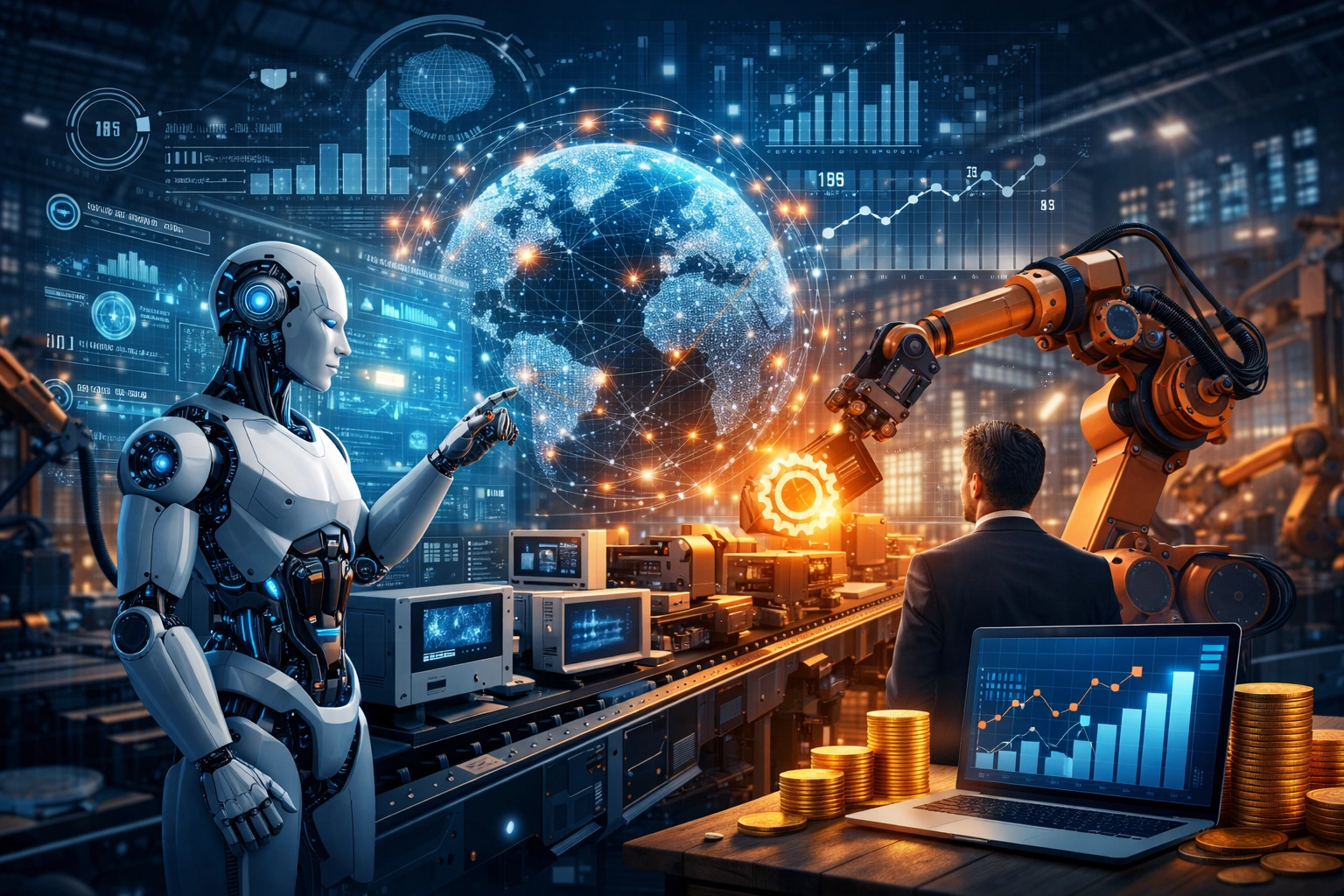
Businesses today operate in a fast-moving digital environment where data is constantly generated. However, many organizations struggle to use this data effectively while also managing operational efficiency. Manual processes slow down performance, and disconnected systems limit the ability to make informed decisions.
AI automation and data analytics together provide a powerful solution. While AI automation streamlines operations, data analytics transforms information into actionable insights. Combined, they enable businesses to operate smarter, faster, and more efficiently.
What Is AI Automation and Data Analytics and Why It Matters
AI automation refers to using artificial intelligence to automate repetitive tasks and workflows. Data analytics focuses on analyzing data to extract insights and support decision-making.
When combined, these technologies create a system where operations are automated, and decisions are guided by real-time data. This matters because businesses need both efficiency and intelligence to stay competitive.
Instead of relying on manual processes and guesswork, companies can leverage automation and analytics to optimize performance and drive growth.
7 Ways AI Automation and Data Analytics Drive Business Growth
1. Streamlining Operations and Reducing Costs
AI automation reduces manual work by handling repetitive tasks. At the same time, data analytics identifies inefficiencies in processes.
This helps businesses:
- Lower operational costs
- Improve workflow efficiency
- Reduce time spent on routine tasks
As a result, organizations can focus on strategic initiatives.
2. Enabling Data-Driven Decision Making
Data analytics provides insights that help businesses make informed decisions. AI automation ensures that these insights are delivered quickly and consistently.
Benefits include:
- Faster decision-making
- Improved accuracy
- Reduced uncertainty
This combination allows businesses to respond quickly to market changes.
3. Enhancing Customer Experiences
AI automation improves customer interactions through chatbots and automated responses. Data analytics helps understand customer behavior and preferences.
Together, they enable:
- Personalized experiences
- Faster support responses
- Improved customer satisfaction
This leads to stronger customer relationships and higher retention rates.
4. Improving Marketing Performance
Data analytics evaluates marketing campaigns and identifies what works best. AI automation executes campaigns efficiently and at scale.
Businesses can:
- Target the right audience
- Optimize campaigns in real time
- Increase return on investment
This results in more effective marketing strategies.
5. Optimizing Resource Allocation
AI and analytics help businesses allocate resources more effectively. By analyzing data, companies can identify where resources are needed most.
This leads to:
- Better workforce management
- Efficient use of budgets
- Improved operational planning
As a result, businesses can maximize productivity and reduce waste.
6. Predicting Trends and Opportunities
Data analytics enables predictive insights, while AI automation acts on these insights quickly.
For example, businesses can:
- Forecast demand
- Identify emerging trends
- Prepare for market changes
This proactive approach helps companies stay ahead of competitors.
7. Driving Innovation and Scalability
AI automation and analytics enable businesses to innovate by identifying new opportunities and optimizing processes.
Organizations benefit from:
- Scalable operations
- Continuous improvement
- Faster innovation cycles
This combination supports long-term growth and sustainability.
Use Cases of AI Automation and Data Analytics
The integration of AI automation and data analytics is transforming industries by improving efficiency and decision-making.
Common use cases include:
- E-commerce: Automated order processing with personalized recommendations
- Finance: Fraud detection and automated transaction monitoring
- Healthcare: Patient data analysis with automated workflows
- Manufacturing: Predictive maintenance and process automation
- Marketing: Automated campaigns with real-time performance insights
These examples show how businesses can combine automation and analytics to achieve better outcomes.
Why Businesses Need AI Automation and Data Analytics
Businesses that operate without automation and analytics often face inefficiencies, slow decision-making, and missed opportunities. In today’s competitive environment, this can limit growth and profitability.
AI automation and data analytics provide a comprehensive solution. They enable businesses to streamline operations, gain insights, and make smarter decisions.
Additionally, companies that adopt these technologies gain a competitive advantage. They can innovate faster, improve efficiency, and deliver better customer experiences.
Conclusion
AI automation and data analytics together create a powerful foundation for business growth. By combining efficiency with intelligence, they help organizations optimize operations, improve decision-making, and unlock new opportunities.
Businesses that embrace this combination can stay ahead in a rapidly evolving market. As data continues to grow, the ability to automate processes and analyze insights will be critical for long-term success.
If your business is looking to scale and grow efficiently, integrating AI automation and data analytics is a strategic step forward.